Your AI Is Wrong Most of the Time. That's Fine If You Design for It.

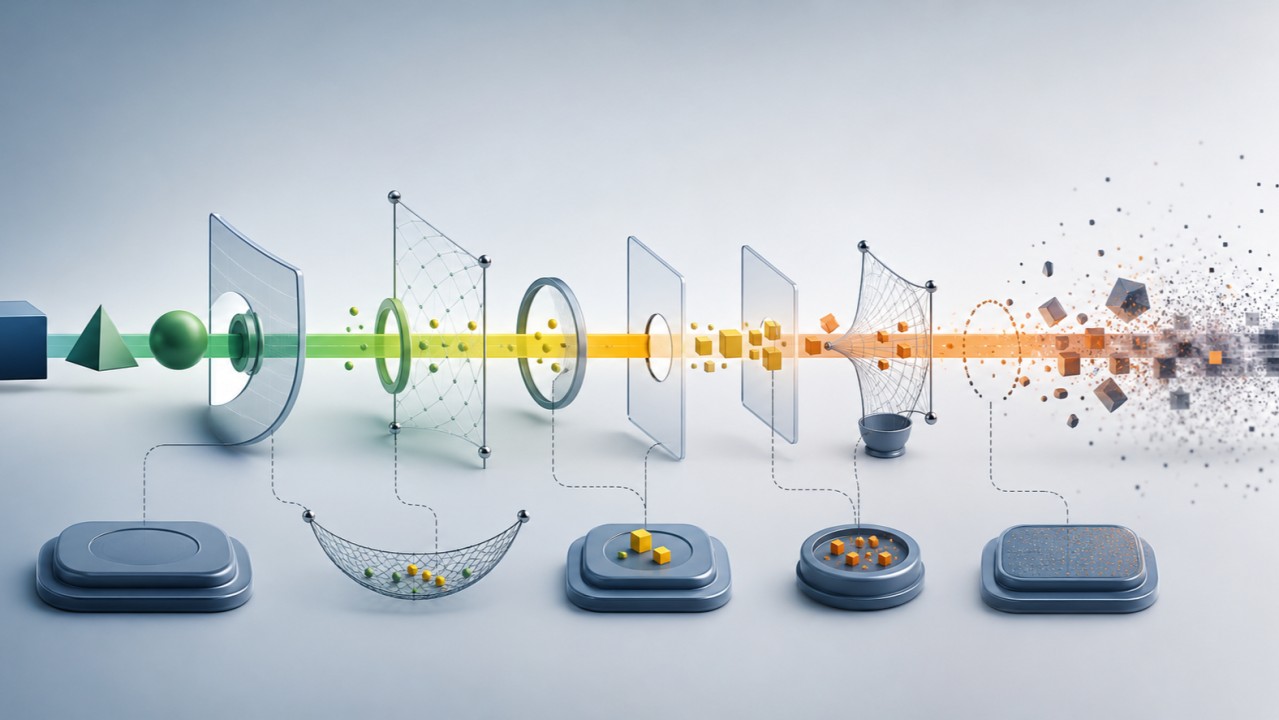
An AI system that is correct 80% of the time produces the wrong answer on one in five attempts. This sounds like a failure. But for many operational use cases, directionally correct outputs that are wrong in acceptable ways are perfectly usable. The problem is that the workflows around the system are designed for binary outcomes — correct or incorrect, success or failure, pass or reject.
Workflows that assume binary accuracy break when they encounter partial correctness. And AI systems rarely fail cleanly.
The Spectrum of Wrong
When AI produces an output that is not fully correct, the nature of the error matters more than the fact of the error. A system that classifies a moderately safe situation as slightly risky behaves differently from one that classifies a critical risk as safe. A summarizer that drops a minor detail behaves differently from one that reverses the meaning of a sentence. A recommender that suggests an acceptable alternative behaves differently from one that suggests a dangerous course of action.
The operational question is not whether the system is right or wrong. It is whether the system is right enough that the downstream process can still function, whether the wrongness is detectable, and whether the consequences of the wrongness are bounded.
Organizations that treat all errors as equal miss three important distinctions:
Tolerable wrongness. A classification that is off by one category in a low-risk domain may be perfectly acceptable. The cost of reviewing every borderline case may exceed the cost of occasional misclassification. Deciding where wrongness is tolerable is a governance choice, not a technical one.
Detectable wrongness. Some errors are obvious to the system itself — low confidence scores, conflicting internal signals — while others are invisible. Designing workflows that surface detectable wrongness before it propagates is more valuable than trying to eliminate all wrongness.
Contained wrongness. The most dangerous AI outputs are not the ones that are wrong. They are the ones that are wrong in ways that cascade. A wrong classification that stops at a human review gate is an inconvenience. A wrong classification that feeds an automation pipeline and triggers an irreversible action is a liability.
The goal is not to build systems that are never wrong. The goal is to build systems whose wrongness is bounded, detectable, and inconsequential in the contexts where it matters most.
Designing Workflows That Survive Imperfection
Graceful degradation requires building slack into workflows. Slack means that when something goes wrong, there is time to catch it, capacity to handle it, and a path back to normal operations. The absence of slack is what turns minor errors into system failures.
Three patterns support graceful degradation:
Threshold layering. Instead of a single go/no-go decision point, use multiple thresholds at different stages. An early check that catches gross errors, a mid-process check that catches category errors, and a final human review that catches edge cases. Each layer is designed to handle a different type of wrongness, and no single layer is expected to catch everything.
Partial acceptance. A workflow that accepts an AI output as directionally correct but adjusts specific fields based on confidence is more resilient than one that accepts or rejects the entire output. The system flags the parts it is unsure about; the reviewer checks only those. This is faster than full review and safer than full automation.
Reversible actions. Wherever possible, the actions the system triggers should be reversible. An automated email can be recalled. An automated reorder can be canceled. An automated flag can be removed. The cost of wrongness is the cost of reversing the action, not the cost of the action itself. Designing for reversibility reduces the consequences of imperfection.
The Maturity Curve of Tolerable Error
As organizations gain experience with AI, their tolerance for partial correctness shifts. Early deployments tend to be conservative — only trust the system when it is highly confident, review everything. Over time, tolerance expands as operators learn which failure modes are benign and which are consequential.
But this expansion is only safe when the organization has done the work of mapping wrongness to consequence. Without that mapping, tolerance increases through exposure and comfort rather than through analysis. And comfort is not the same as understanding.
The organizations that degrade gracefully are the ones that have answered a question most teams avoid: what does acceptable wrongness look like in practice, and how do you detect it before it becomes a problem?
If your system is partially wrong on every fifth output, does your workflow survive that, or does it collapse into full review?
Think this argument fits your event? Tell me about the room — the calendar is selective.
Start a conversation