Who Owns AI Risk: The CTO, Legal, or the Business?

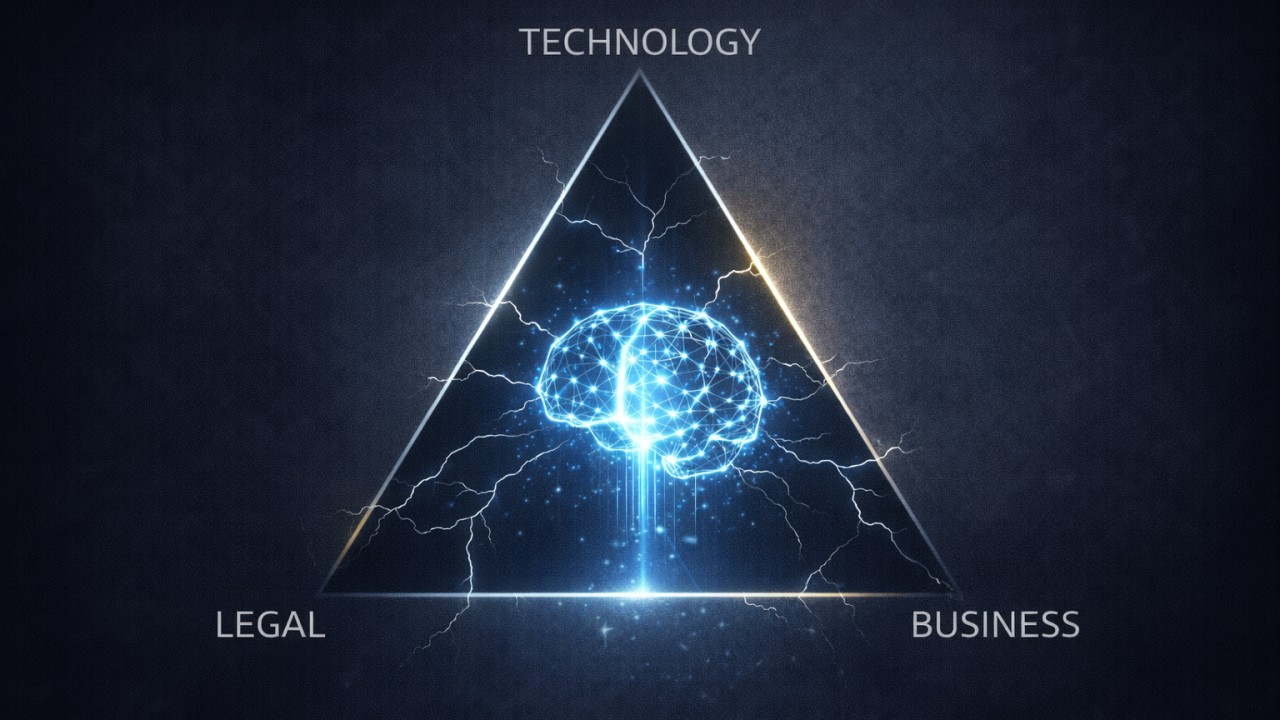
Who Owns AI Risk: The CTO, Legal, or the Business?
AI risk doesn't announce itself as a single failure. It emerges quietly — in handoffs, assumptions, and gaps between teams that all believe someone else is responsible.
That's because AI risk doesn't map cleanly to any existing ownership model.
And that misalignment is where most real-world AI failures hide.
The Ownership Illusion
Ask three leaders who owns AI risk and you'll get three confident answers:
- The CTO will point to models, data, infrastructure, and reliability.
- Legal will focus on compliance, liability, and regulatory exposure.
- The business will argue risk lives where decisions affect customers, revenue, and operations.
All of them are right. And that's the problem.
AI systems cut across technical, legal, and operational domains. But most organizations are still structured to manage risk within domains.
So AI risk ends up being "shared." Which, in practice, often means unowned.
When Shared Ownership Becomes No Ownership
Shared ownership sounds collaborative. In reality, it creates ambiguity at exactly the moments where clarity is required. Consider a simple failure scenario:
An AI system makes a recommendation that:
- Is technically correct given its inputs
- Violates a regulatory expectation
- Produces a harmful business outcome
Who intervenes?
- Engineering says, "The model behaved as designed."
- Legal says, "We weren't consulted on this use case."
- The business says, "We trusted the system."
No one is wrong. But no one is accountable either.
AI risk doesn't break systems first. It breaks responsibility chains.
Why AI Risk Is Not a Policy Problem
Most organizations respond by writing policies. Usage guidelines. Approval checklists. Ethical principles. These documents are well-intentioned — and largely ineffective.
Why?
Because AI risk doesn't materialize at policy review time.
It materializes at:
- Runtime
- Scale
- Speed
- Edge cases no one anticipated
Governance that lives only in documents cannot control systems that operate continuously.
AI risk must be designed into the system, not appended after deployment.
The Missing Layer: Decision Ownership
At its core, AI risk is not about models or laws.
It's about decisions.
Specifically:
- Who is allowed to make them
- When AI is allowed to act
- When humans must intervene
- Who has authority to override outcomes
Most AI systems today influence decisions without clearly assigning ownership of those decisions.
That creates a dangerous illusion: AI appears autonomous, but accountability remains human — just undefined.
Until something goes wrong.
Reframing the Question
The real question is not:
"Does AI introduce risk?"
All systems do.
The real question is:
"Where does responsibility transfer when AI participates in decisions?"
Until organizations answer that explicitly — in architecture, escalation paths, and operating models — AI risk will continue to live in the gaps.
Invisible. Diffuse. And dangerous.
The Hard Question Leaders Must Answer
When AI causes harm, who actually answers for it — in practice, not theory?
If your organization can't point to a clear owner, then the risk already exists.
You just haven't seen it yet.
Think this argument fits your event? Tell me about the room — the calendar is selective.
Start a conversation