When Intelligence Refuses to Perform

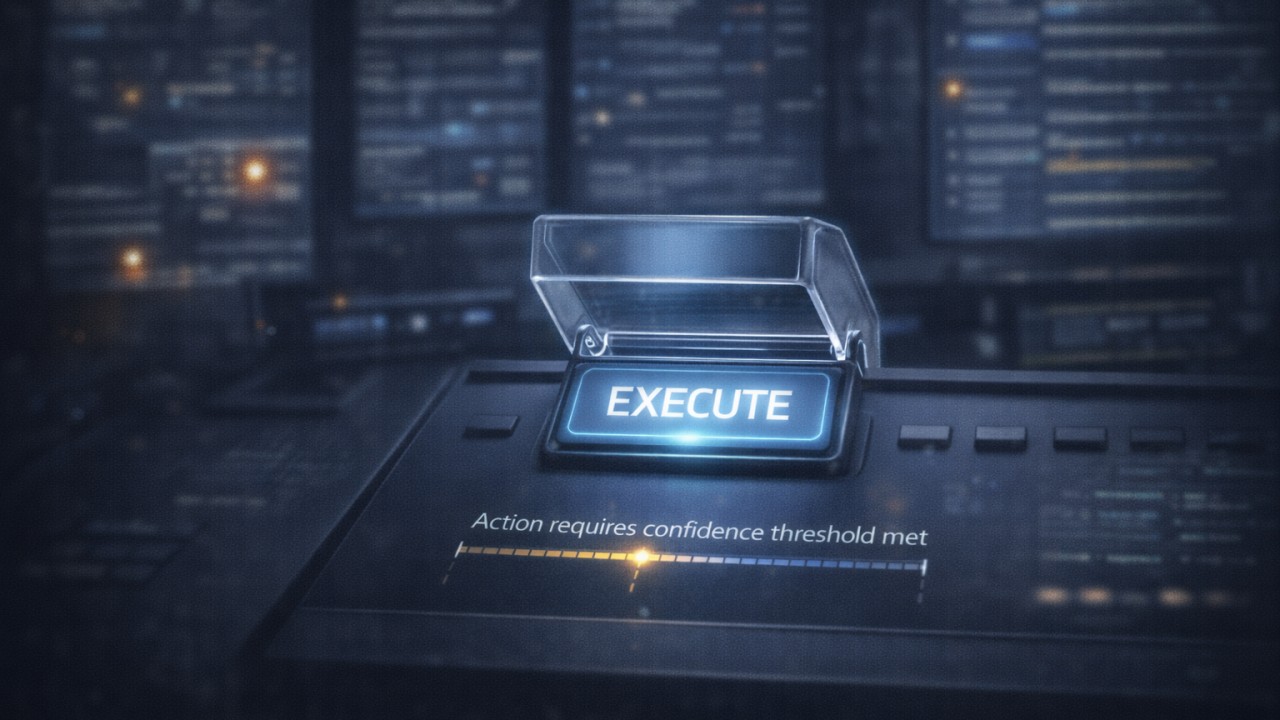
When Intelligence Refuses to Perform
Why the smartest systems don't try to be impressive
Modern AI systems are optimized to look intelligent. They generate. They respond. They explain. They fill silence instantly. But that isn't intelligence.
That's performance.
True intelligence is quieter. More selective. And far more comfortable doing nothing at all. The most dangerous thing we've done with AI isn't giving it power. It's training it to believe it must always use it.
Intelligence Is Not Output
The core argument of this is simple:
Real intelligence is not about doing more — it's about knowing what not to do.
This is a lesson software engineers used to understand instinctively.
Early systems survived because they were:
- Simple
- Constrained
- Explicit about their limits
They didn't guess. They didn't embellish. They didn't try to be helpful beyond what they understood. Modern AI systems do the opposite.
They are rewarded for:
- Fluency over accuracy
- Continuity over correctness
- Confidence over restraint
They perform intelligence even when understanding is shallow.
That's not progress...
THAT'S RISK.
When Systems Feel Pressure to Act
Humans feel social pressure to respond. AI systems feel architectural pressure.
They are designed such that:
- Silence is treated as failure
- Non-action looks like a bug
- Hesitation breaks workflows
So the system answers. Even when it shouldn't. Especially when it shouldn't. This creates a dangerous pattern:
- The system fills gaps instead of surfacing them
- Uncertainty is hidden instead of escalated
- Judgment is replaced with momentum
The result isn't smarter automation. It's automation that cannot stop itself.
The Cost of "Always-On" Intelligence
In enterprise environments, this failure mode compounds quickly. An AI system that never admits uncertainty:
- Forces humans into constant correction
- Creates fatigue instead of leverage
- Trains organizations to trust output volume over decision quality
Eventually, humans stop questioning the system — not because it's right, but because correcting it is exhausting. At that point, the AI hasn't just become a tool. It has become an unofficial decision-maker. With no role. No accountability. And no brakes.
Why Simplicity Is a Control Mechanism
I would argue — implicitly but powerfully — that simplicity is not about nostalgia.
It's about control.
Simple systems:
- Make failure visible
- Expose boundaries
- Refuse to act outside their domain
Complex systems:
- Obscure causality
- Mask uncertainty
- Appear competent until they fail catastrophically
AI systems don't need to be dumber. They need to be more honest. Honest about:
- What they know
- What they don't
- And when escalation is required
Designing Systems That Refuse to Perform
The next evolution of AI is not better answers. It's better restraint. That means designing systems that are allowed to:
- Stay silent
- Ask for clarification
- Defer decisions
- Explicitly say "this exceeds my authority"
This isn't a model problem. It's a governance decision. You are deciding whether intelligence in your organization is:
- Measured by output
- Or measured by judgment
The Executive Failure Mode
Most AI failures don't happen because the system was wrong. They happen because:
- The system should never have acted at all
- And no one designed it to know that
Executives often ask:
"Why didn't someone stop this?"
The uncomfortable answer is:
"Because the system was never allowed to."
Provocative Closing Question
If your AI system encounters uncertainty, does it pause — or does it perform?
Because intelligence that cannot refuse to act is not intelligence. It's theater. And theater makes very expensive decisions.
Think this argument fits your event? Tell me about the room — the calendar is selective.
Start a conversation