The Hidden ROI of Reducing AI Rework

The Hidden ROI of Reducing AI Rework
Almost every enterprise AI system has a hidden cost that doesn't show up in any dashboard.
It's not compute. It's not model API calls. It's the invisible work that operators do every day to compensate for AI outputs that are directionally useful but not quite right.
I've seen teams where operators spend 15–25% of their time mentally discounting AI recommendations — reading a result, recognizing it's close but off, adjusting mentally, and continuing. That time doesn't appear in any metric. The system looks efficient, while the humans around it silently absorb a tax that compounds across every workflow.
Here's the encouraging part: this hidden cost isn't inevitable. Organizations that measure and reduce AI rework unlock ROI that their competitors can't see.
The Three Types of Invisible Rework
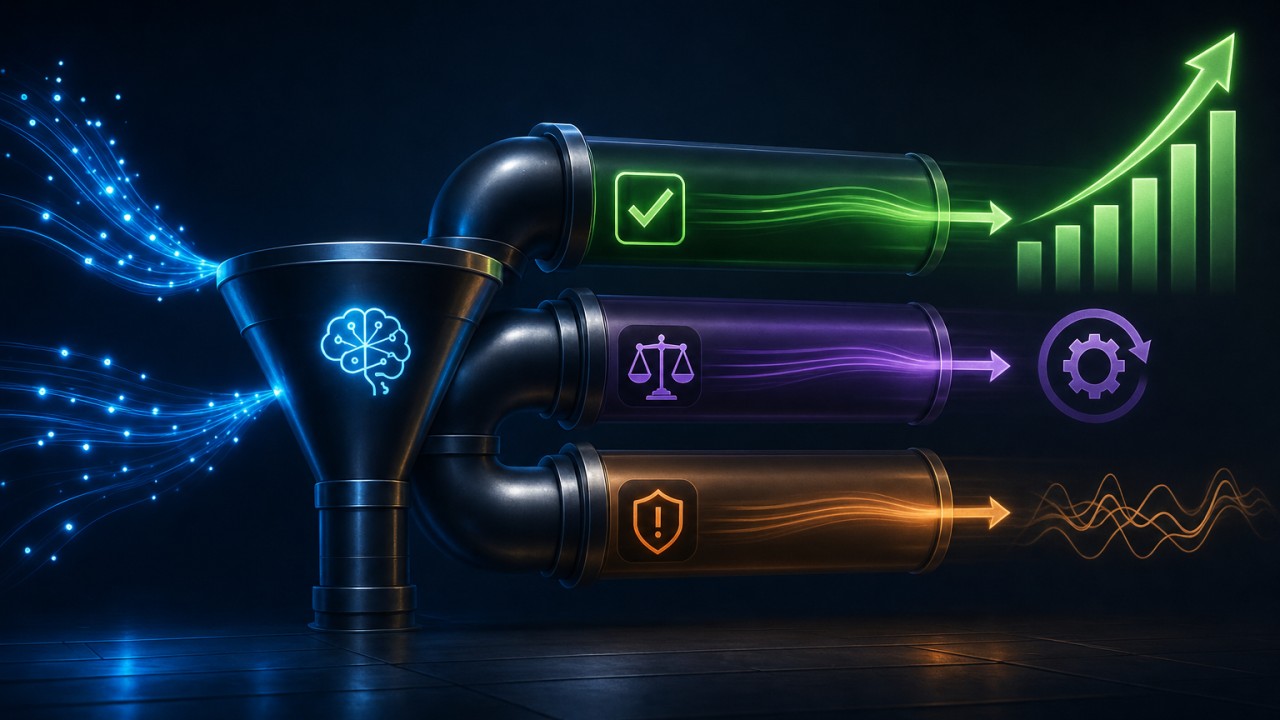
After watching teams operationalize AI across manufacturing, retail, and logistics, I've observed three distinct categories of rework:
1. Verification rework.** An operator reads an AI output, cross-references it against a source, confirms it's correct, and moves on. This is the most common form. It sounds harmless, but multiplied across dozens of daily interactions, it consumes hours. The fix: surface evidence alongside recommendations so verification becomes a glance, not an investigation.
2. Correction rework.** The output is wrong, so the operator fixes it. This isn't just time-consuming — it's demoralizing. The best teams track correction rates and treat them as a system health metric, not an operator performance issue.
3. Shadow-process rework.** Because the AI can't be fully trusted, operators build parallel workflows — manual spreadsheets, private notes, personal workarounds. These shadow processes are a sign that trust is low and rework is hidden. But they're also gold: they reveal exactly where the system needs to improve.
The ROI Math That Changes Investment Decisions
Here's a calculation I've used with multiple leadership teams that always shifts the conversation:
Take one workflow. Estimate how long operators spend verifying, correcting, or compensating for AI outputs each day. Multiply by the number of operators and their fully loaded cost. That number — often 15–25% of team capacity — is the rework tax.
Now ask: what if we invested half that figure into improving the system's accuracy at the margins where rework concentrates? The payback period is often measured in weeks, not months.
The organizations that understand this math don't see AI as a cost center. They see rework reduction as one of the highest-ROI investments available.
How to Start Measuring Today
You don't need elaborate tooling. Start with one thing: track overrides in your highest-volume workflow for two weeks. Every time an operator changes an AI recommendation, log it. Categorize it as a minor adjustment, a meaningful correction, or an override born of distrust.
What you'll find is that rework concentrates in specific patterns. Maybe it's always the same input type. Maybe it's always at certain confidence ranges. Maybe it's always a particular operator (because they're more experienced and therefore more skeptical).
Each pattern is a fix waiting to happen.
Reducing rework isn't about building a perfect AI system. It's about making the AI good enough that the humans around it can do their best work without constantly compensating.
Think this argument fits your event? Tell me about the room — the calendar is selective.
Start a conversation