The Cost of AI That Doesn't Know When to Stop

The Cost of AI That Doesn't Know When to Stop
Source:** Rich's LinkedIn draft
Status:** Draft — unpublished
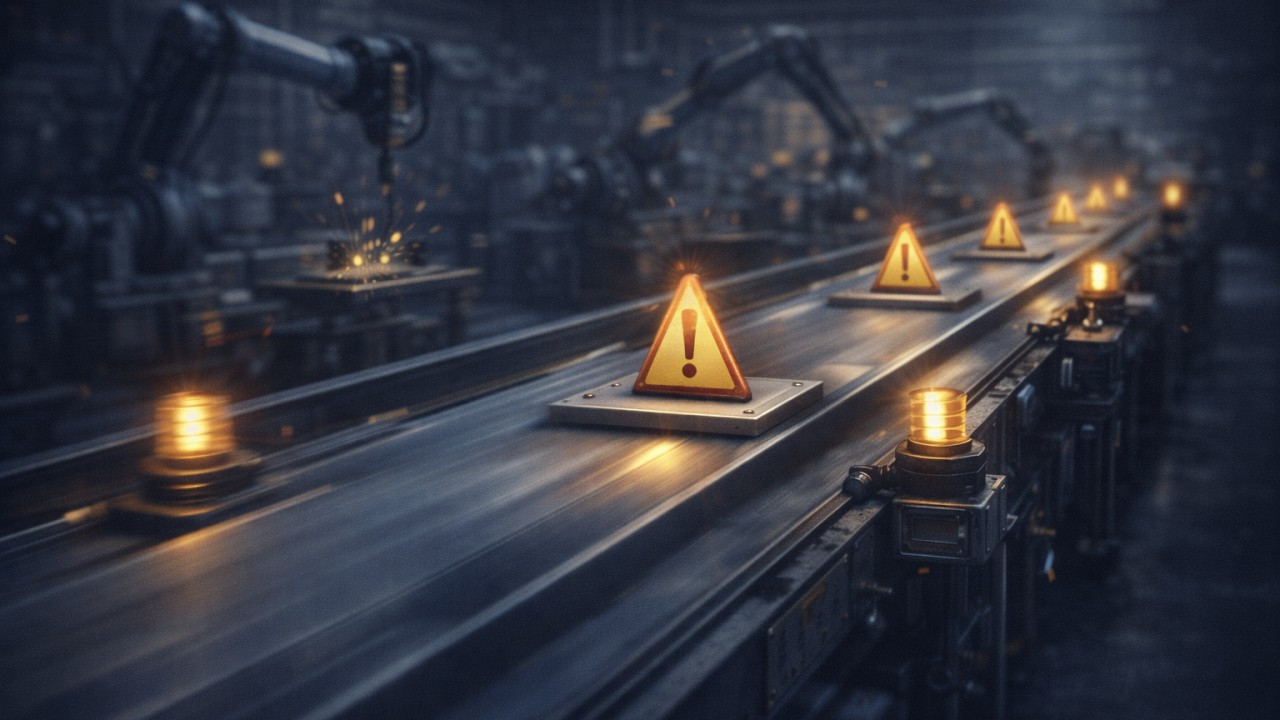
Cover image:** "Automation continuing past its own warning signs."
Series:** AI Reliability & Uncertainty (2 of 4)
---
Most operational AI failures do not begin with a dramatic error. They start with something small and seemingly manageable: a system that keeps going when it should pause. An automated check flags slightly more edge cases than usual. A recommendation engine grows more confident in a narrow pattern. A content model fills gaps instead of asking whether a gap should exist at all. Nothing is obviously broken. The system is "working."
What is actually happening is quieter and more structural. Decisions are being made without an exit condition.
Unchecked AI does not just make mistakes. It compounds them. Each output becomes the input for the next step, and without a defined moment to stop, reassess, or escalate, small inaccuracies gain momentum. Automation does not tire, but the organization around it does. Humans are pulled into a reactive posture—correcting, overriding, and cleaning up after the system—rather than shaping its behavior upstream.
This is how runaway automation emerges. Not through malicious intent or dramatic failure, but through the absence of constraints. Many AI systems are optimized to continue: generate the next response, process the next item, take the next action. In isolation, that persistence looks like efficiency. At scale, it becomes a feedback loop without brakes.
The cost shows up first in human fatigue. Operators are asked to monitor systems that do not slow down on their own. Review queues fill faster than they can be cleared. Exceptions become the norm. Over time, people stop correcting every issue, not because they do not care, but because the volume makes vigilance unsustainable. The system's confidence grows as human attention degrades.
This is not a failure of intelligence. It is a failure of design maturity. Systems that matter in production are not defined by how often they act, but by how deliberately they choose not to. Mature automation includes clear stop conditions: thresholds where uncertainty is too high, impact too broad, or context too ambiguous to proceed safely. It knows when to wait, when to ask, and when to hand control back.
Allowing an AI system to pause is not an admission of weakness. It is an acknowledgment of reality. No model sees the full system it operates within—regulatory constraints, downstream dependencies, shifting incentives, or human consequences. Those boundaries have to be designed in, owned, and revisited as the system scales.
The alternative is a slow erosion of trust. Teams learn that the AI will always act, even when it should not. Overrides become habitual. Escalations happen late. By the time a true failure is visible, the system has already trained the organization to ignore early warning signs.
Stopping is not the opposite of automation. It is part of it. The question is not whether AI can act autonomously, but whether it has been given permission—and instruction—to refrain.
Does your AI know when not to act?
---
See also: [[draft-1-allowed-to-say-i-dont-know]] | [[draft-3-designing-visible-uncertainty]] | [[draft-4-why-most-ai-pilots-stall-after-success]]
Index: [[LinkedIn Post Index]]
Think this argument fits your event? Tell me about the room — the calendar is selective.
Start a conversation