The AI Kept Working. That Was the Problem.

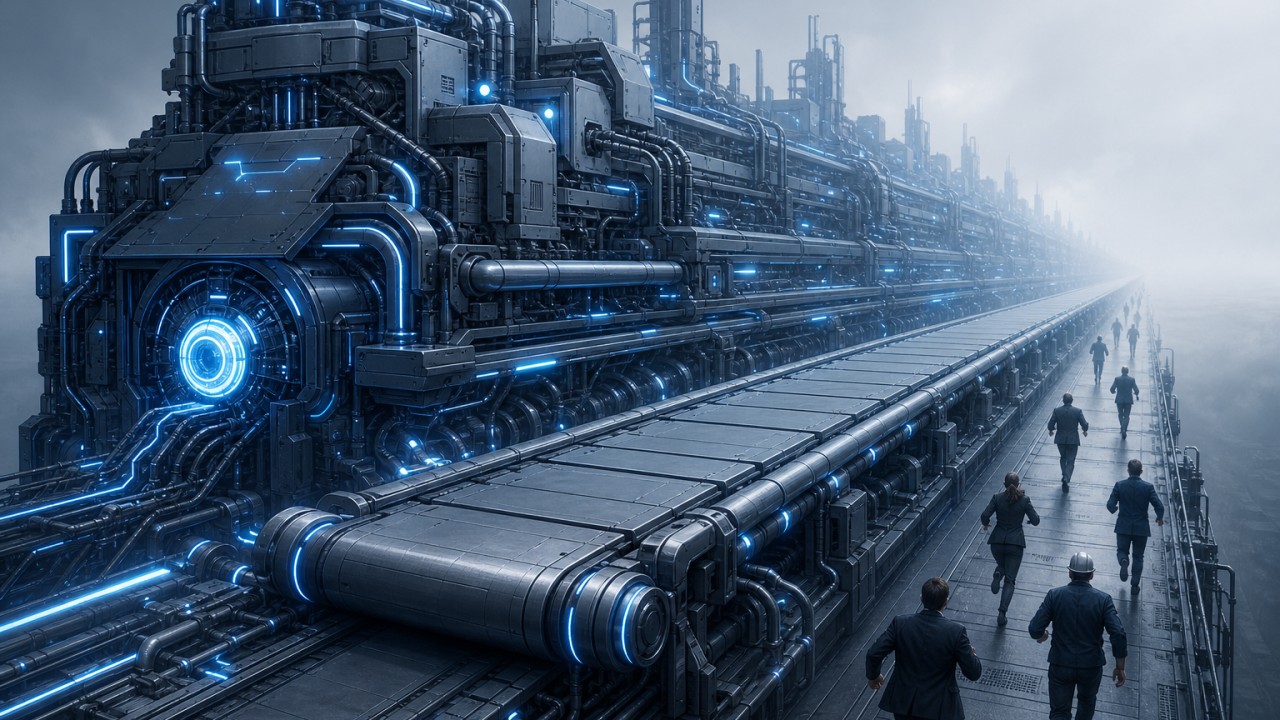
Most operational AI failures do not begin with a dramatic error. They begin with something that looks like success: a system that keeps going when it should pause. An automated check flags slightly more edge cases than usual. A recommendation engine grows more confident in a narrow pattern. A content model fills gaps instead of asking whether a gap should exist at all. Nothing is obviously broken. The system is "working."
What is actually happening is quieter and more structural. Decisions are being made without an exit condition.
How Runaway Automation Emerges
Unchecked AI does not just make mistakes. It compounds them. Each output becomes the input for the next step, and without a defined moment to stop, reassess, or escalate, small inaccuracies gain momentum. The organization around the system is pulled into a reactive posture — correcting, overriding, and cleaning up after the system — rather than shaping its behavior upstream.
Consider a recommendation system that has been running for months. Initially, it surfaces relevant items with reasonable accuracy. But as user behavior shifts — seasonal patterns, new inventory, changing preferences — the model's recommendations drift. It continues to generate outputs based on outdated correlations. No single recommendation is obviously wrong, but over time, the system is recommending items that no longer match user intent. The organization attributes the slow decline in click-through rates to external factors. The system keeps running because no one designed a condition under which it would stop and reassess.
The Three Costs of Continuous Operation
Human fatigue. Operators are asked to monitor systems that do not slow down on their own. Review queues fill faster than they can be cleared. Exceptions become the norm. Over time, people stop correcting every issue because the volume makes vigilance unsustainable. The machine generates outputs 24/7; the human can sustain high-quality review for only a few hours at a time. When the machine never pauses, oversight quality degrades, and the system learns from increasingly poor supervision.
Organizational misalignment. Teams adapt to the system's rhythm rather than questioning its direction. Schedules are built around its throughput. Expectations are set based on its volume. When the feedback loop is long — weeks or months — the system may process thousands of flawed transactions before anyone notices. By then, the organization has already adapted to the flawed output.
Erosion of trust in governance. When stakeholders see that an AI system continues operating through clear degradation, they begin to question whether anyone is in control. The response is often overcorrection: sweeping restrictions or moratoriums that could have been avoided with better design upstream.
A system that never stops looks good on dashboards. The hidden costs — quiet mistakes, operator fatigue, gradual drift — do not appear in any report. Without visibility into these costs, there is no pressure to design for stopping.
Designing Meaningful Stop Conditions
Stop conditions come in several forms. Confidence-based stopping uses a minimum threshold below which the system will not act autonomously — but the threshold must depend on the cost of error in each specific context, not on a general standard. Drift-based stopping monitors performance against a baseline and signals when the gap exceeds a tolerable range. Time-based stopping requires human re-authorization after a set period of continuous operation, forcing periodic reassessment even when nothing appears wrong. Consequence-based stopping pauses the system when the potential impact of an action exceeds a predefined threshold — critical for financial, safety-critical, and operational systems.
If stop conditions are so clearly valuable, why are they so often absent? Because they are difficult to specify in advance. Teams do not know what failure modes will look like until the system is in production, and once the system is running and delivering value, adding constraints feels like a step backward. Stop conditions also require ownership — someone must monitor them, respond to them, and decide whether to restart the system. Until ownership is clear, boundaries remain undefined.
The Organizational Shift
Allowing an AI system to pause is not an admission of weakness. No model sees the full system it operates within — regulatory constraints, downstream dependencies, shifting incentives, or human consequences. Those boundaries have to be designed in, owned, and revisited as the system scales.
The alternative is a slow erosion of trust. Teams learn that the AI will always act, even when it should not. Overrides become habitual. Escalations happen late. By the time a true failure is visible, the system has already trained the organization to ignore early warning signs.
Stopping is not the opposite of automation. It is part of it.
Does your AI know when not to act?
Think this argument fits your event? Tell me about the room — the calendar is selective.
Start a conversation