Six Days in China: High-Tech AI Advancements Outpacing American Innovation

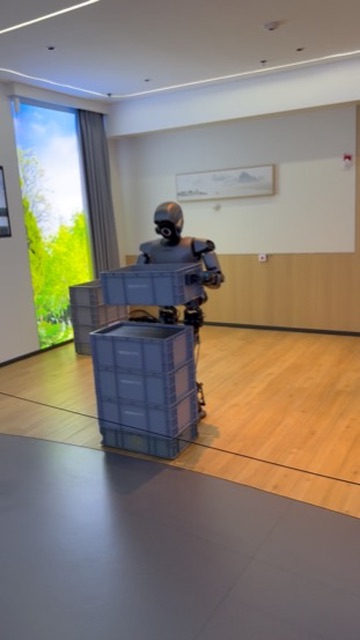
Six days in China is enough to change how you see the rest of the world. Not because of any single technology — we have all of these things in the United States — but because of the speed, scale, and strategy behind everything they build. I went expecting to see progress. I came back understanding that the gap isn't in ideas. It's in how fast a country can turn an idea into something operating at scale.
The most striking part wasn't the factories or the robots themselves. It was the compounding loop underneath them: engineering-driven decision-making, open-source AI, and an education system that treats technology as a core subject instead of an optional debate. Each one feeds the next, and the whole system moves at a pace that most American leaders haven't fully registered.
Speed Is a Strategy, Not a Byproduct
Consider the nuclear example, because it frames everything else. China can approve and build eleven reactors for roughly what it costs us to build one. Whether or not you think nuclear is the right answer, that single comparison is a measure of something important: what a country can do when permitting, planning, and execution are treated as one system instead of a gauntlet.
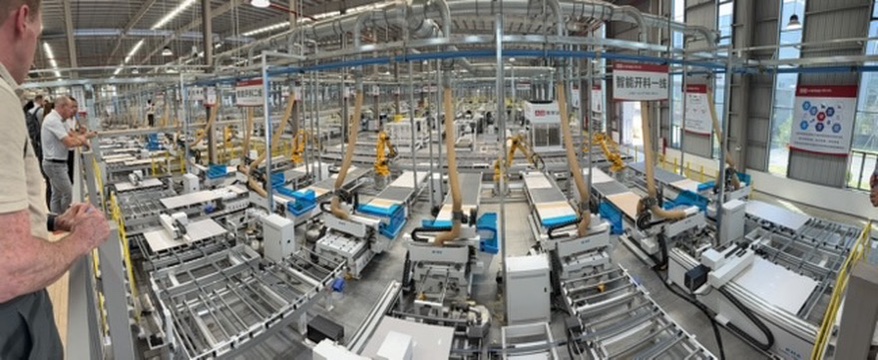
The same pattern shows up in infrastructure, manufacturing, and technology. Central planning has real costs — I'm not romanticizing it. But it produces a velocity that decentralized debate, at least in its current American form, does not. The uncomfortable question for us isn't "would we want their system?" It's "what parts of our speed problem are self-inflicted?"
An Engineering-Run Society, On Purpose
China graduates around 1.5 million engineers a year, and its government is heavily populated by people with engineering backgrounds. That's not an accident of culture — it's a deliberate pipeline. When the people making decisions have spent their careers building systems, the national conversation defaults to how to build, not whether to build.
Compare that with our own pipeline. We graduate roughly 36,000 lawyers a year and only a few hundred mining and metallurgical engineers. We're a nation of process and precedent; they're a nation of prototypes and production. Both approaches have strengths. But when the competitive question is about rare earths, advanced manufacturing, and applied AI, the imbalance in who we're training starts to look like a strategic liability.
Open-Source AI Is Compounding Physical Progress
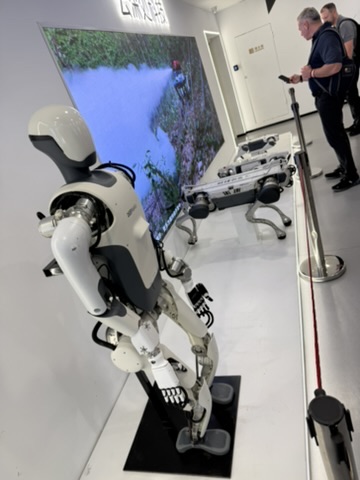
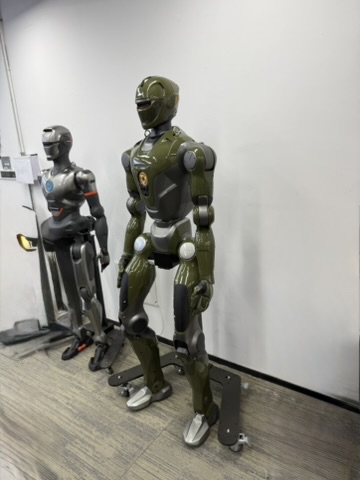
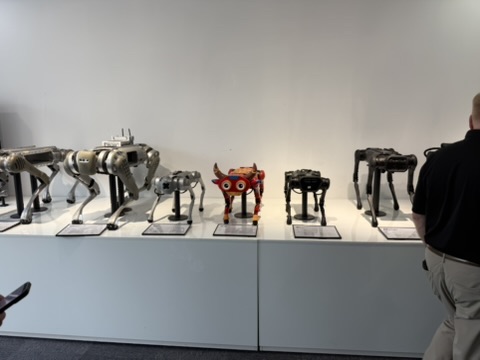
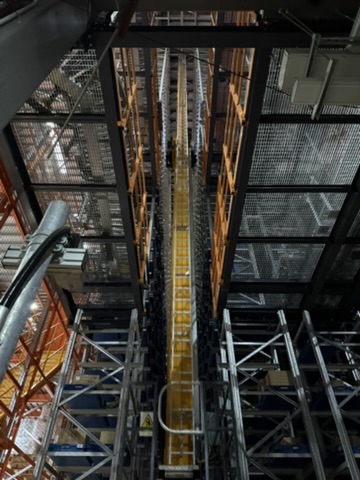
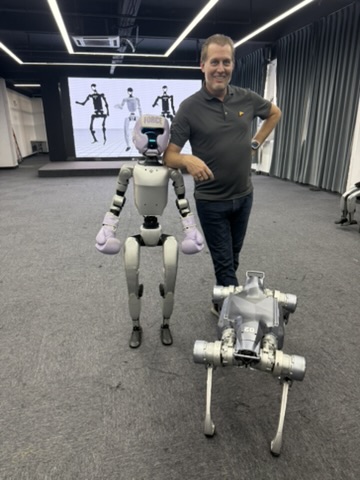
The most impressive technology story in China right now isn't a single breakthrough — it's open-source AI accelerating physical AI. Humanoid robots, quadrupeds, drones, automated storage and retrieval systems — the advancements are shared across platforms, so every improvement becomes everyone's improvement.
There's a phrase that captures it perfectly: once one humanoid learns to walk, they all learn to walk. In an open-source ecosystem, progress compounds because nothing is siloed. Every lab, factory, and startup builds on the same moving baseline. That's a fundamentally different curve than the one most U.S. companies are on, where proprietary walls keep every team re-solving the same walking problem.
Once one humanoid learns to walk, they all learn to walk. Open-source progress compounds — and that's the curve we're competing against.
E-Commerce Clusters at a Scale We Don't Build
We also toured e-commerce operations that look nothing like what we have in the U.S. — clusters of companies concentrated in towers as tall as 70 stories, sharing training, centralized services, and infrastructure. Thousands of businesses iterate in the same building, scraping real-time market data and adjusting faster than any single company could on its own.
This is clustering as a deliberate industrial policy, not as an accident of geography. When companies share capital, talent, and logistics in one dense system, the unit economics of experimentation collapse. That's exactly the kind of ecosystem advantage that's hard to replicate with scattered standalone operations.
Rare Earths: The Head Start Nobody Debates
China's head start on rare earth minerals isn't a secret — it's a decade of consistent, policy-backed investment in mining, processing, and the education pipeline to support it. Rare earths sit underneath everything in high-tech: batteries, motors, sensors, defense systems. The country that controls the supply chain controls the floor price of the future.
Meanwhile, we have a mining education gap that should alarm every technology executive. For every mining or metallurgical engineer we graduate, we graduate dozens of lawyers. We debate policy while they build capacity. This isn't a short-term problem — it's a generational one, and the clock started running a long time ago.
AI in K-12: Mandatory vs. Debated
In China, AI is mandatory in K-12 education. Kids are learning the fundamentals of machine intelligence the same way they learn math — as a core literacy. In the U.S., we're still debating whether chatbots belong in classrooms and whether to ban or embrace the tools students already use.
The gap this creates isn't in the current workforce. It's in the one being built right now. A generation of Chinese students will graduate assuming AI literacy is baseline; a generation of American students will graduate having debated whether it should be allowed. Those two populations enter the workforce at different starting lines, and that difference compounds every year.
Musts, Not Shoulds
The trip left me with a clear conviction: the U.S. has to treat AI education, automation, and rare earths as musts, not shoulds. A "should" is a nice-to-have that gets deferred when budgets tighten. A "must" is a constraint the whole system organizes around — the way the best-run companies treat security or compliance.
We don't need to copy China's model. We need to be honest about the speed we're giving up and deliberate about what we're training, building, and funding as a country. The technologies are not the scarce resource. The will to move at scale is.
Getting more innovative than ever before isn't a slogan — it's the only real answer. The organizations and countries that treat AI literacy, automation, and critical supply chains as musts will set the pace for the next couple of decades. The ones that keep treating them as shoulds will be catching up, and catching up is always more expensive than leading.
Listen to the full conversation
I traveled with Todd Wanek, CEO of Ashley Furniture, and Matt Kirchner — they debriefed the whole trip on the TechEd Podcast: the reactors, the robots, the clusters, and what it means for U.S. manufacturing and education.
Listen: Six Days in China →


Think this argument fits your event? Tell me about the room — the calendar is selective.
Start a conversation