Setting Confidence Thresholds That Earn Trust in Production

Setting Confidence Thresholds That Earn Trust in Production
One of the most practical decisions an AI team makes is also one of the most overlooked: "At what confidence level should this system escalate to a human?"
Set the threshold too high, and the system makes errors autonomously that should have been caught. Set it too low, and you bury your operators in false positives. Settle on a number without evidence, and you've made a governance decision that determines your system's actual throughput — without anyone realizing it.
Here's the encouraging part: this decision is entirely knowable. Organizations that invest in getting it right gain a structural advantage that compounds over time.
The Three Ways Teams Get Thresholds Right
I've watched teams move from guesswork to precision on threshold setting. They follow three practices:
1. They start with operational data, not model metrics.** The first mistake most teams make is using model accuracy as their threshold reference. Model accuracy tells you how the system performed on a test set. It doesn't tell you what happens when the system is wrong in production. The teams I've seen succeed start by analyzing actual escalation outcomes — what was overridden, what was accepted, and what got missed. That operational data reveals the real cost of false positives and false negatives in your specific context.
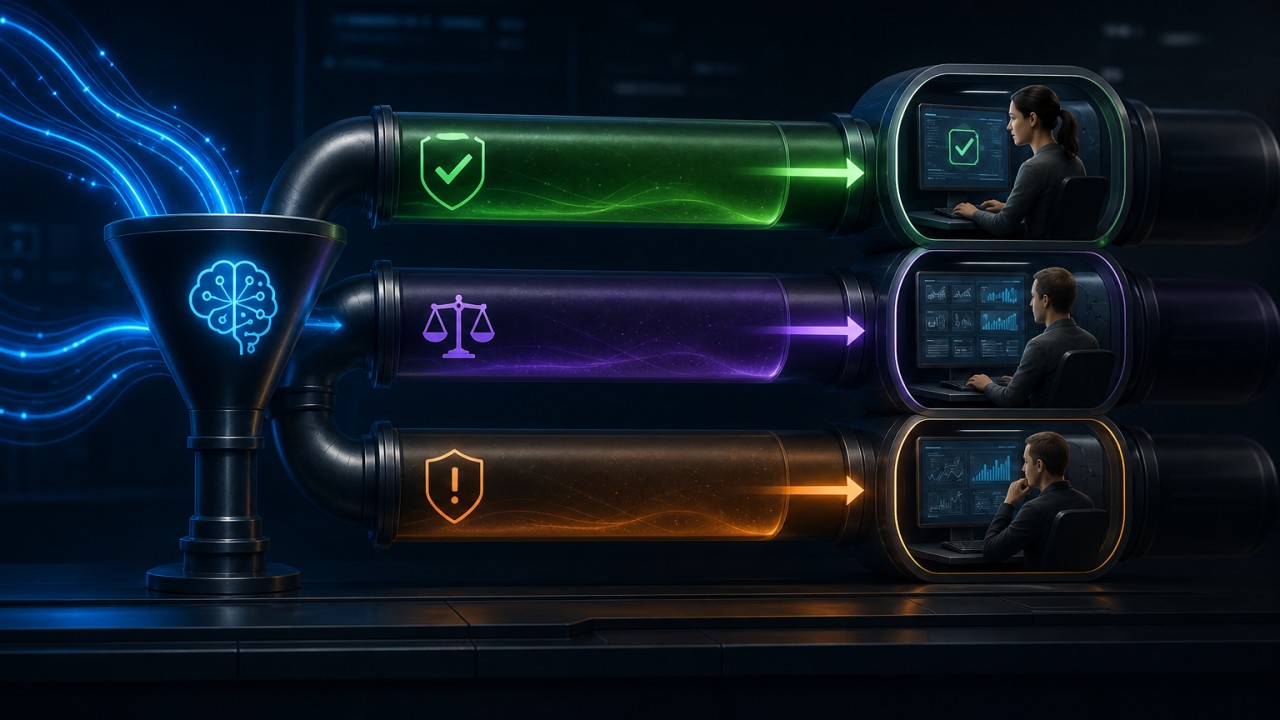
2. They set different thresholds for different decision types.** A single threshold across all workflows is a sign of governance immaturity. The teams winning at scale recognize that different decisions have different consequences. A product categorization suggestion can tolerate lower confidence than a pricing recommendation. An internal workflow trigger can be more permissive than a customer-facing action. Tiers, not numbers, are the right abstraction.
3. They treat thresholds as dynamic, not static.** The best teams don't set thresholds once and forget them. They monitor escalation rates, override patterns, and feedback loops. As the system improves, thresholds tighten — giving the AI more autonomy where it's earned it. This creates a virtuous cycle: the system earns trust, trust enables more autonomy, more autonomy generates more data, and more data improves the system.
A Framework for Getting Started
If you're setting thresholds for the first time and want a practical approach, here's a framework:
- Map consequences.** For each decision your system makes, estimate the cost of a wrong autonomous decision versus the cost of an unnecessary escalation.
- Calibrate from observed data.** Run your system in shadow mode or with human review for two weeks. Log confidence scores alongside operator decisions. You'll quickly find the threshold where the system is reliably correct and the point where uncertainty degrades quality.
- Build in review cadence.** Schedule a threshold review after every significant model update, after every 10× volume increase, and at least quarterly. The threshold isn't a number on a chart. It's a governance decision that should be revisited as your system matures.
Confidence thresholds aren't a technical detail. They're one of the highest-leverage governance decisions you'll make. Get them right, and your AI earns trust the old-fashioned way: through consistent, observable performance.
Think this argument fits your event? Tell me about the room — the calendar is selective.
Start a conversation