Existential Flexibility
 ▶
▶
Business owners, job applicants, and even content employees tend to approach their existential debates all wrong. I've watched it play out the same way for years: someone staring at a fork in the road and asking, "how do I become the best?" It's the wrong question. The right question is smaller, harder, and far more useful: how do I become my best?
Best vs. Your Best
Chasing "the best" is a losing game by design — there's always someone faster, better funded, or luckier, and the moment you anchor your worth to a ranking someone else controls, you've handed away the one thing you actually own. Chasing your best is a different discipline entirely: it's a measurement you can actually take, a trajectory you can actually steer, and a standard that compounds instead of deprecating.
The Sacrifice Is the Point
That's where the "short-term sacrifices" come in. The moves that look expensive in the quarter — turning down a shiny shortcut, investing in a skill that doesn't pay this month, rebuilding something the right way instead of the fast way — are the moves that compound over years. Existential flexibility is the willingness to make those trades on purpose, not by accident. It's trading short-term comfort for long-term trajectory, and doing it schematically rather than emotionally.
A Schema, Not a Mood
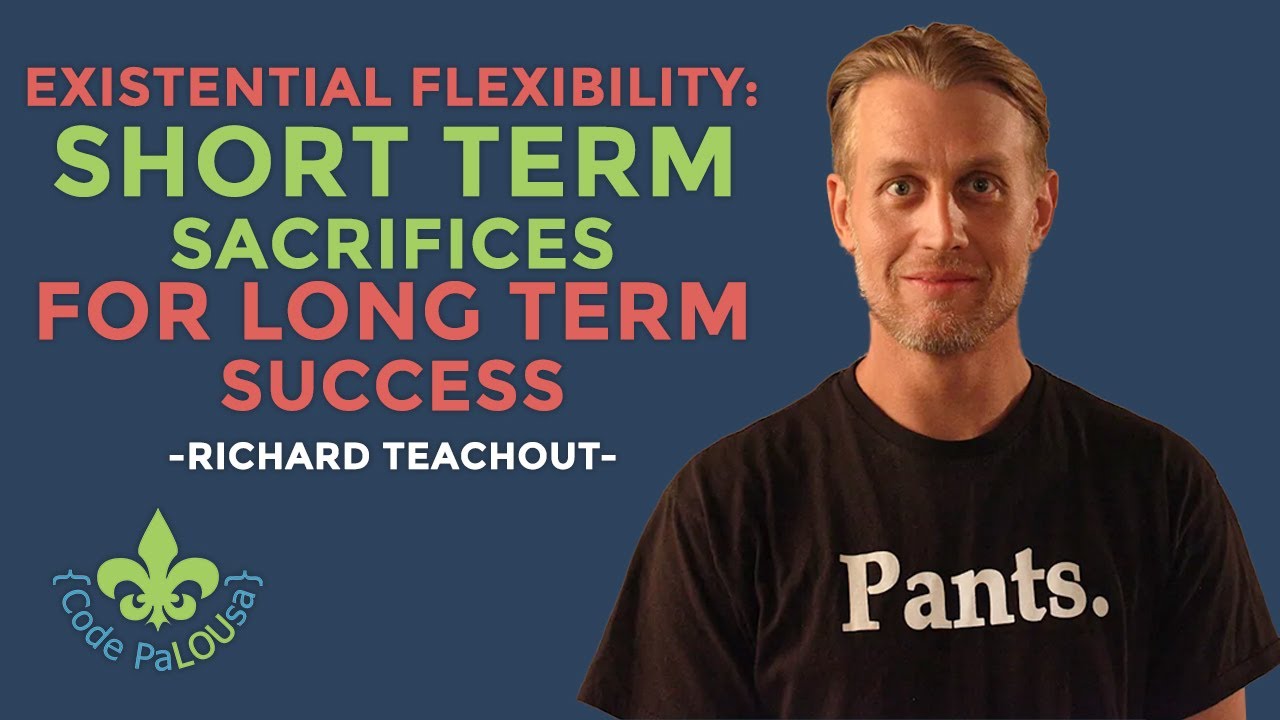
This talk is the framework for doing it deliberately: how to focus on long-term success, sustainability, and growth — and how to use that focus to skyrocket your current development and trajectory, whether you're running a business, hunting for the next role, or grinding inside an organization. It's not motivation; it's a method. I gave it at Code PaLOUsa 2020, a software development conference covering the whole stack, and the room it landed with was the room I'd want to be in: people who build things and want to build them for a long time.
Think this argument fits your event? Tell me about the room — the calendar is selective.
Start a conversation