Designing Decision Boundaries for AI Systems

Designing Decision Boundaries for AI Systems
Every AI system makes decisions. What varies—often implicitly—is how far those decisions are allowed to go. Many failures attributed to "unexpected behavior" are, in reality, boundary failures. The system acted exactly as designed, just beyond the point anyone had clearly defined.
Decision boundaries are rarely absent. They are simply assumed. A model is deployed with a general sense of what it should handle, and everything else is left to judgment—often the model's, sometimes the operator's, and occasionally no one's at all.
In early stages, this ambiguity feels manageable. Volume is low. Context is fresh. Teams remember what the system was intended to do. Over time, those assumptions decay. The system is reused, repurposed, and extended. New inputs arrive. New dependencies form. Boundaries stretch without being revisited.
AI does not recognize informal limits. It recognizes permissions.
If a system is allowed to act, it will. If it is not explicitly constrained, it will explore the edges of its authority. This is not recklessness. It is optimization. Without boundaries, persistence becomes the default behavior.
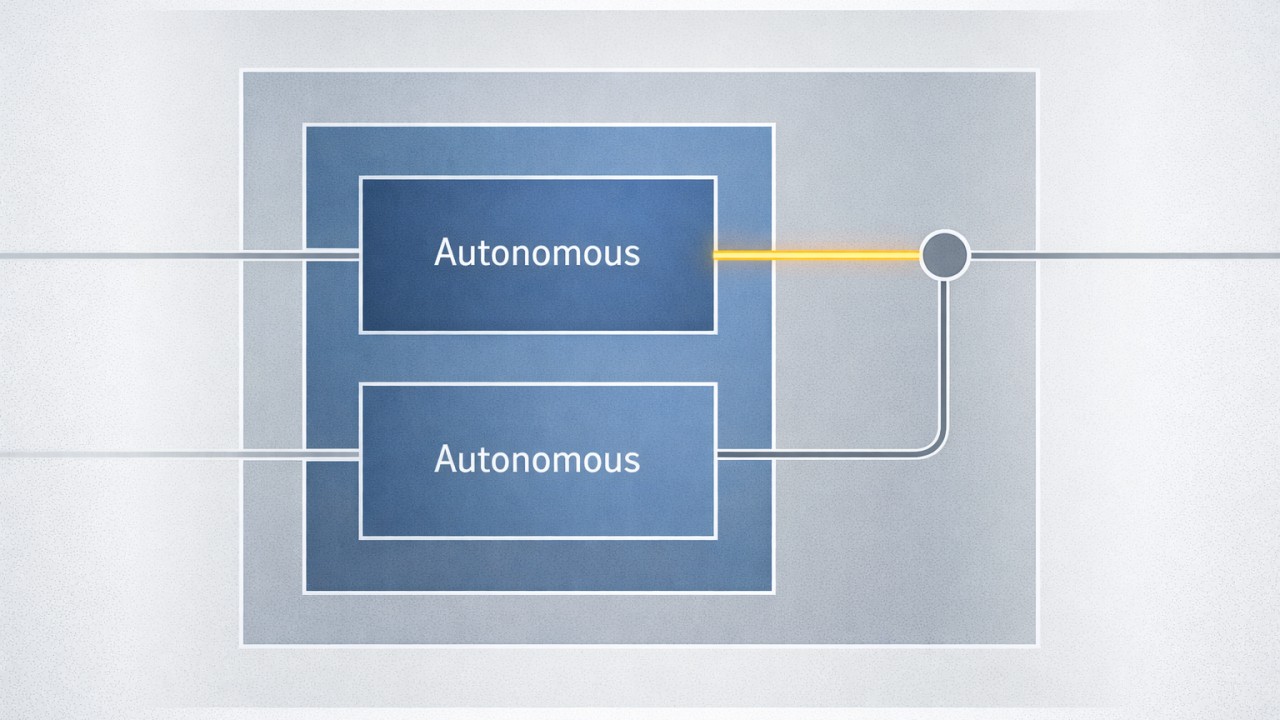
Clear decision boundaries answer a simple question: what must be true for the system to proceed on its own? These conditions can be about confidence, impact, reversibility, or novelty. When they are met, autonomy is appropriate. When they are not, the system should slow down, escalate, or stop entirely.
Designing these boundaries is not a modeling exercise. It is an operational one. Boundaries encode risk tolerance, regulatory posture, and organizational accountability. They reflect where humans must remain in the loop, not because machines are incapable, but because consequences extend beyond the model's view.
Well-designed boundaries reduce friction rather than add it. Operators stop second-guessing outputs because they know where autonomy ends. AI systems become more predictable, not less, because their scope is explicit. Failures are smaller because they occur within defined zones.
The absence of boundaries creates a different outcome. Humans compensate informally. Trust erodes unevenly. Some teams over-rely, others under-use. The system appears inconsistent, when the real issue is that no one agreed on where decisions should stop.
Decision boundaries are not static. They must be revisited as systems mature, contexts shift, and stakes change. But without an initial commitment to defining them, AI remains an open-ended actor in environments that demand precision.
The most important design question is not what your AI can decide. It is where its authority ends.
Think this argument fits your event? Tell me about the room — the calendar is selective.
Start a conversation