Building an Internal AI Platform Teams Actually Want to Use

Building an Internal AI Platform Teams Actually Want to Use
The Adoption Gap
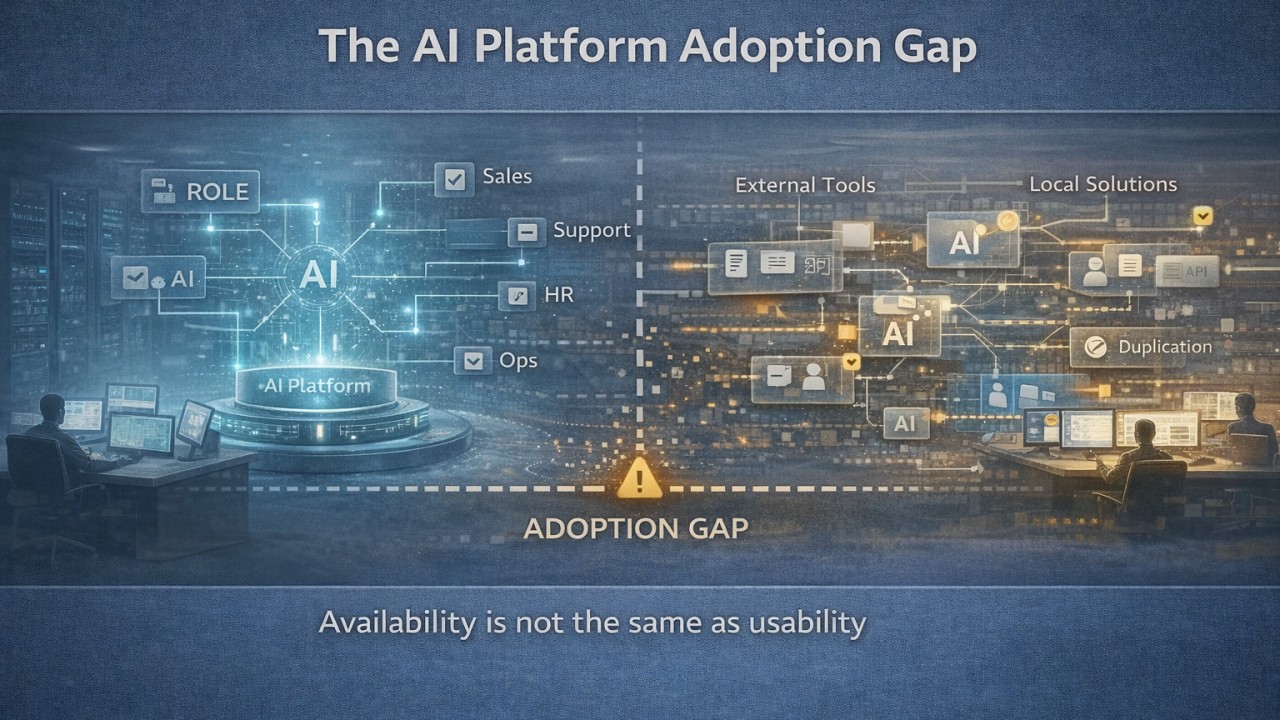
Most enterprises invest in internal AI platforms with centralized models, shared infrastructure, and standardized access. However, many struggle with a fundamental problem: teams don't use them as expected. Rather than adopting the platform, teams continue using external tools and create local solutions, increasing fragmentation instead of eliminating it.
Availability Isn't Usability
While platforms typically focus on model access, API endpoints, and infrastructure scalability, these elements are insufficient. Teams need clarity on applying AI to their workflows, reusable components, integration with existing tools, and low-friction onboarding. Without these features, platforms remain technically sound but operationally distant.
The Friction Problem
When using a platform requires multiple approvals, complex setup, unclear patterns, and additional overhead, teams seek alternatives—even less controlled ones. The easiest path becomes the default path, making successful platforms those that simplify the governed approach rather than complicate it.
Design Around Use Cases, Not Capabilities
Rather than organizing platforms around technological capabilities like text generation or classification, effective platforms address actual workflows: customer response drafting, ticket triage, document processing, and knowledge retrieval. This perspective shift transforms platforms from "What can technology do?" to "How do teams work?"
Key Success Factors
High-performing platforms provide:
- Pre-built workflow templates
- Standardized prompt patterns
- Integrated controls
- Connectors to existing systems
They also prioritize both developer and operator experience, ensuring non-technical teams can effectively use the platform within their daily tools.
Governance as Default
Governance should feel embedded rather than imposed, with controls built into templates and defaults aligned with policy. Success should be measured by usage depth and standardized pattern reuse—not merely access metrics.
Think this argument fits your event? Tell me about the room — the calendar is selective.
Start a conversation